
Integrating Localized Cold and Heat Therapies for Recovery
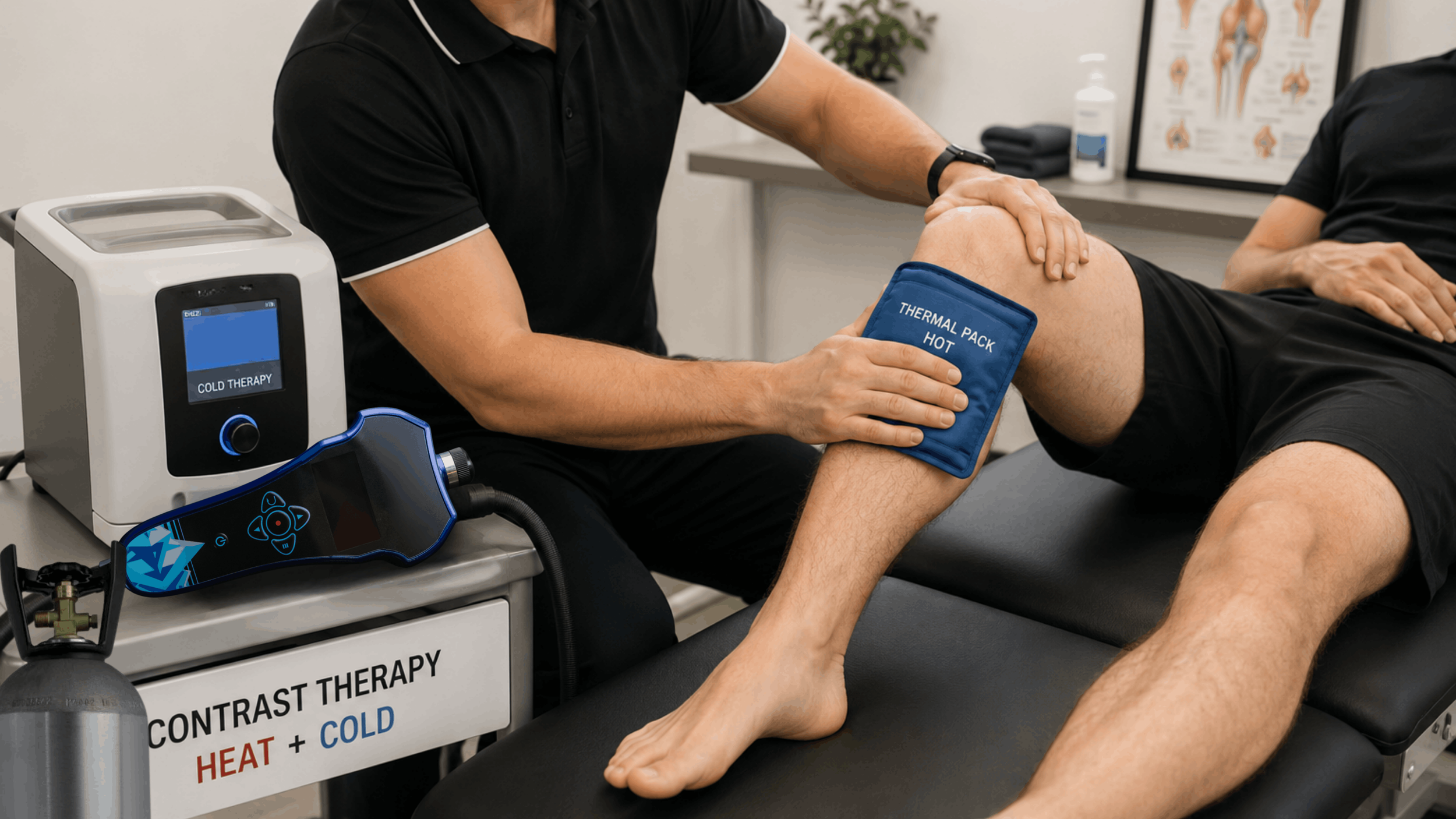
Cold and heat therapies have become some of the most widely used tools in recovery, rehabilitation, and pain management - and for good reason. When applied correctly, they produce powerful physiological responses that can accelerate healing, reduce pain, and enhance long-term resilience. Understanding how each modality works individually and how they can be combined is key to unlocking their full potential.
Cold Therapies for Recovery
Localised Cryostimulation, cold water immersion, cold compression and icing all reduce superficial tissue temperature, dampen pain and modulate inflammation. Cold is often assumed to be most effective only in acute and sub-acute stages of injury, but this oversimplifies the science. Whether cooling is applied for prolonged periods or as brief cold-shock exposures significantly influences outcomes, as each triggers different vasomotor responses and is suited to different stages of injury and recovery.
Heat Therapy for Recovery
Sauna, infrared and localised heat promote vasodilation, increase tissue extensibility and support deep muscular relaxation. Localised heat applications are most valuable in later rehabilitation stages, for chronic conditions and stress management where increasing blood flow and tissue pliability supports both healing and recovery.
Contrast Bathing: The Power of Combining Cold and Heat
Contrast therapy is considered to amplify physiological recovery responses by alternating between hot and cold exposure. Contrast bathing involves alternating between localised cold and heat applications, such as ice packs or cold compression with heat packs or warm water to support injury recovery and tissue repair.
Localised Cryostimulation can also be combined with heat to further enhance metabolic and circulatory responses. This technique is considered to be particularly effective for injuries involving restricted blood flow, such as tendon injuries. The alternating exposure creates a vascular pump effect. During the heat phase, blood vessels expand, while the cold shock phase causes them to temporarily constrict, followed by a rapid return to dilation. This repeated cycle drives blood flow through the targeted tissues, actively supporting tissue repair and accelerating the recovery process. The benefits include:
Improved circulation and waste clearance - Repeated vasoconstriction and vasodilation helps flush metabolic waste from tissues and improves localised blood flow, reducing swelling by promoting lymphatic and venous return.
Better oxygenation - Evidence shows contrast bathing can increase intramuscular oxygenation, measured by near-infrared spectroscopy, supporting both recovery and tissue healing.
Inflammation control - Cold reduces inflammation by lowering cytokine production, while heat supports tissue repair and extensibility — making their combination particularly effective across different phases of recovery.
Pain relief and improved tissue quality - Studies show contrast bathing can reduce muscle stiffness, increase tissue elasticity and improve pain tolerance.
What the Research Shows
A randomised clinical trial comparing heat alone with heat followed by cold in individuals with restricted knee motion found similar initial improvements in passive knee flexion, but greater gains in the contrast group after cold application, suggesting added benefit beyond heat alone (Lin, Y.H., 2003).
Another study on combat sports athletes found that heat and contrast therapy increased tissue perfusion, while cold increased muscle tone and elasticity. The authors concluded that localised heat, cold and contrast therapy can acutely modify muscle properties, particularly blood flow and tissue elasticity (Trybulski et al., 2024).
Key Takeaway
Cold and heat therapies each produce distinct physiological benefits, and when combined intelligently through contrast bathing, their effects can be significantly amplified.
By harnessing the opposing physiological responses of vasoconstriction and vasodilation, contrast bathing improves circulation, oxygenation, tissue quality, and pain tolerance. Whether used for rehabilitation or recovery support, understanding how and when to integrate cold and heat is what truly unlocks the potential of thermal therapy.
Interested in becoming a Recovery Specialist in Thermal Therapy?
Thermal therapy is increasingly adopted for injury management and prevention. Therapists, physiotherapists, and sports teams are integrating cold and heat modalities to reduce pain, enhance recovery, and support performance.
INSTANTCRYO™ recommends AdvancedCryo's Thermal Recovery Specialist course for professionals who use both cold and heat therapy in their treatment services and want to further their expertise. The program provides a qualification as a thermal recovery specialist and focuses on understanding physiology, injury management, and the integrated use of cold and heat therapies.
All INSTANTCRYO™ users have access to an exclusive discount on the AdvancedCryo Thermal Recovery Specialist course.
Visit advancedcryo.net to learn more. You can also check them out on social media at @advancedcryo_
Written by Luca Dorigo
